Notes on VL Myrsky detailsSunnuntai 31.1.2016 - Member of Tuesday Club VL Myrsky had a long design period with many changes which is one reason for its construction methods getting old by the end of WW2 standards. Let’s take another look in some details. In my previous blogs I have already described building of Myrsky’s box type wing spars. These spars are one piece cantilever beams going from wing tip to wing tip. They have three full length webs made of plywood. Webs are connected by upper and lower flanges which have a varied glued construction of pine and plywood. But this is not enough. Box type spar needs inner support parts which consists usually of beam stiffeners and/or blocking. These are flange spreaders which help webs to carry shear forces and fitting loads. The shape of blocking depends of where they are situated in a spar which gets narrower towards wing tip. Blocking is tapered to avoid stress concentrations. Thick flanges, three webs and lots of blocking is a lot of wood. Wooden wing spars are noticeably heavier than aluminium spars. With wooden ribs the whole wing is increasingly heavier than an all-metal wing.
You may ask why State Aircraft Factory was still using wooden wings for Myrsky fighter? After all it is mostly of wooden construction. Main metal structure is its welded steel tube frame inside plywood-covered fuselage. The answer may be that State Aircraft Factory was used to build wooden aircraft since 1920’s. Also there was a demand to be self-contained in the times of crisis - and wood was abundant in Finland.
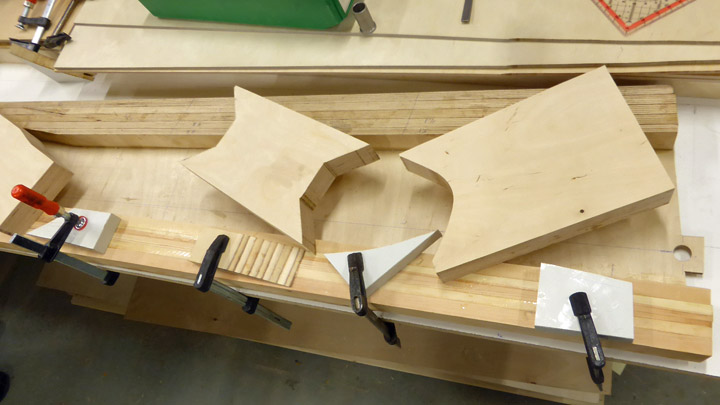
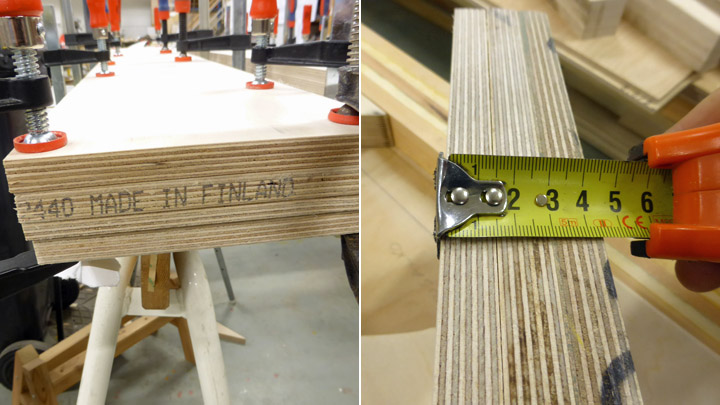
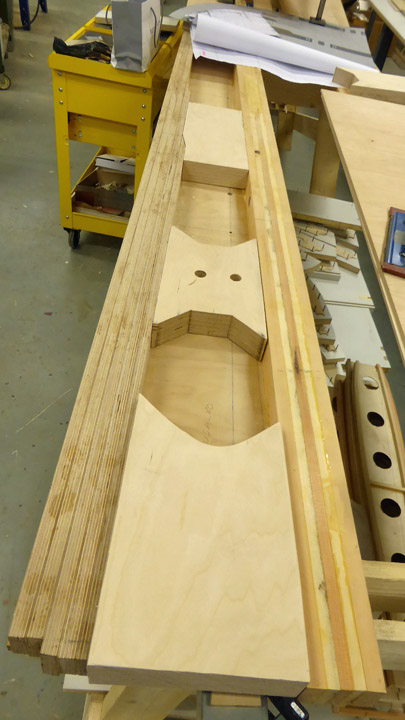
We have started making blocking for Myrsky’s wing spars at Tuesday Club. Blocking must of course be as thick as flanges are wide. This is 45 millimeters. We made our own 45 mm plywood by glueing together 10 and 15 mm thick plywood sheets. After drying this strong plywood is cut into correct shapes. We have test fitted blocking inside of flanges and are ready to start constructing the final wing spars.
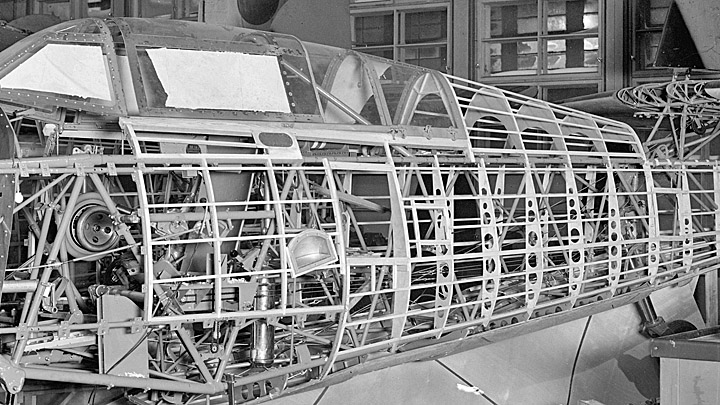
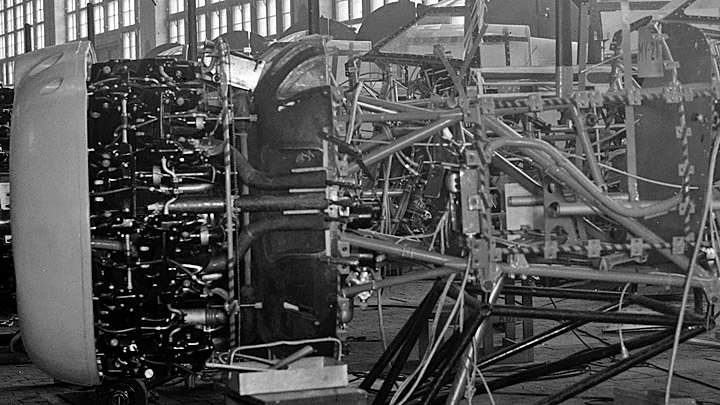
As said Myrsky’s fuselage is built around a steel tube frame. Its cross-section is square, which means there must be an outer shell to arrive at Myrsky’s oval cross-section and the more aerodynamic contours needed for a fighter plane. Starting from cockpit backwards there is a wooden structure over steel tube frame and all is covered with plywood skin. However, pre-series aircraft (MY-1 - My-4) had fabric instead of plywood.
Myrsky’s fuselage shape is constructed over steel tubes with wooden formers and stringers. Stringers run lengthwise giving structural strength and formers give the wanted shape. As Myrsky’s cross-section is roughly oval and the fuselage tapers backwards, there are formers on all four sides of steel tube frame and every former is unique.
Myrsky’s restoration project is divided so that Finnish Air Force Museum in Central Finland will do the final construction. The Tuesday Club of the Aviation Museum Society is responsible for producing formers. Partly they are also made at City of Vantaa school shops.
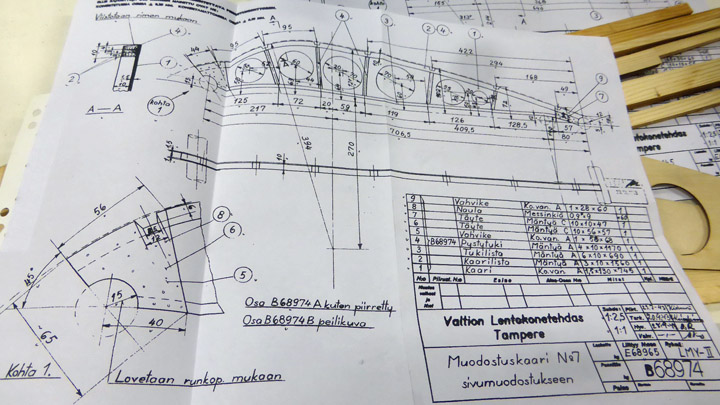
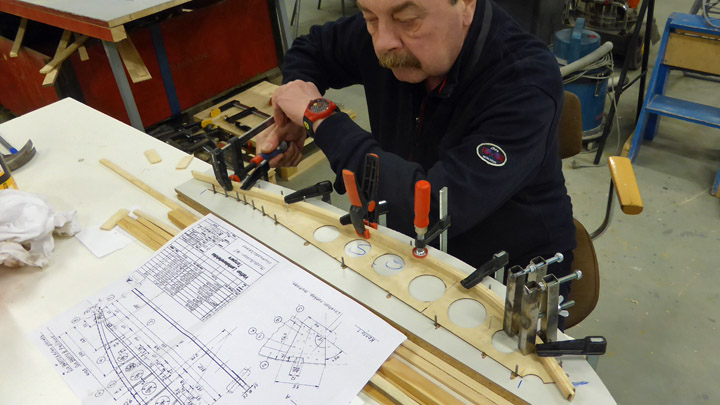
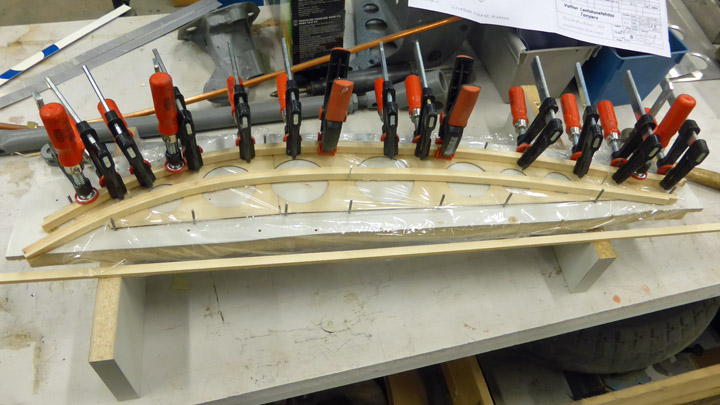
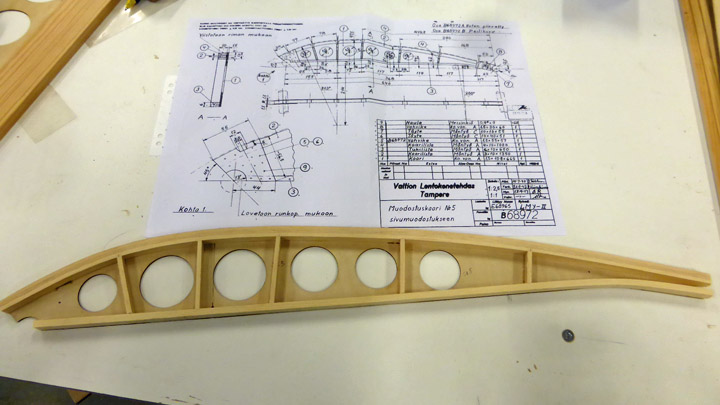
Formers for fuselage sides are here coming together. They are glued together in jigs with the same method used for Myrsky’s wing ribs.
Formers have strong curvature for outward flanges and so these flanges are made of slats which are glued together in jig. This helps getting strong and solid curvature. These formers are C-beams with plywood web only on one side. Stiffeners between flanges help in keeping it all in shape under various forces.
Myrsky’s steel tube frame ends in front at firewall and beyond it is engine mount. This mount has a circular steel tubing where Myrsky’s radial engine is attached. Engine mount is covered with aluminium plating. This shielding plate ("pot plate") is naturally behind NACA ring which covers the engine. Aluminum plate has an exact shape and we have made a mould for it. The plate will be made by a specialist.
Images: Lassi Karivalo plus historic images from archives of Finnish aviation Museum |
|
Avainsanat: aviation history, restoring, old aircraft, VL Myrsky II, MY-14 |
Restoring of corroded brake shieldTorstai 14.1.2016 - Reino Myllymäki The restoration of a hard corroded part of the landing gear in a earlier blog post raised a debate. Since the commenting with a photo is not possible, I decided to write a short blog post about the question.
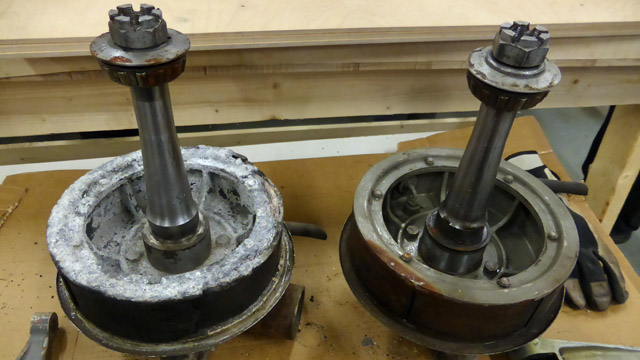
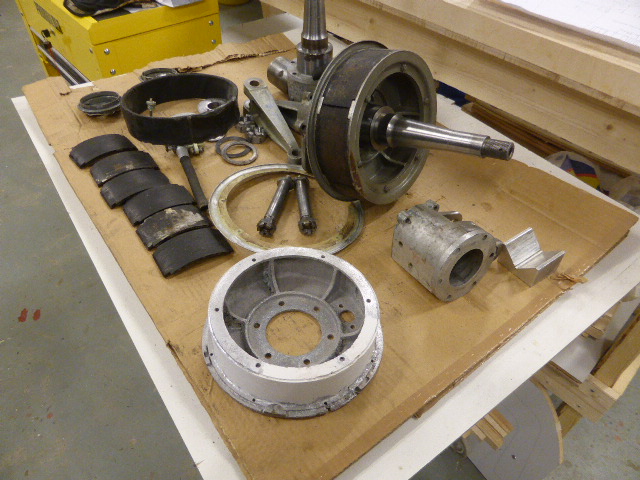
In the photo are two original parts of VL Myrsky. The left hand side part is oxidized and corroded but the right hand side part is in rather good condition. The objects in question are parts of landing gears but neither rims nor brake drums. They are part of the brake system of VL Myrsky. They are brake shields. According to the service instructions of VL Myrsky II (page 25) brake system is functioning as follows: "The wheels of the main landing gears are equipped with hydraulic brakes. The brakes are according to the expansion tube system, where the pressure of the hydraulic liquid expanses the rubber tube in the brake shield. It pushes friction surfaces (brake shoes) against the brake drum and result is braking." The round brake shield is made from magnesium cast. During the long storage period in a garage, a chemical reaction has started and led to a rich oxidation. Due to the oxidation the magnesium casts have some corroded spots. If they were made from aluminium they would suffer the future use. But they are made from magnesium and therefore a restoration was needed.
The best method to restore was strenghtening by cement. The cement used was made from non-shrink epoxy resin. After the cementation the brake shield was lathed to the original size. The brake shield on the board is waiting for painting. |
|
Avainsanat: aviation history, restoring, old aircraft, VL Myrsky II, MY-14 |

Ilmailumuseot.fi - Aviationmuseums.fi